
Rules
Part of Anniversaries and archives: finding and citing an old death notice
What an in memoriam notice is, and how it differs from a death notice and an obituary
What an in memoriam notice is, how it differs from a death notice and a news obituary, what families put in one, and why researchers use them.
An in memoriam notice is the least discussed document in this whole field, and it is the one families place most often. It is not an obituary, it is not a death notice, and treating it as either produces confusion in both directions.
Nobody is named here and no death is reported. This page is about the form, not about any person.
What to take away
- An in memoriam notice is placed by a family on an anniversary, and it announces nothing. It is an act of remembrance in a public space.
- Because it announces nothing, it is not evidence that a death has just occurred, and it is regularly misread as such by search engines and by people.
- What it is good evidence of is a date and a relationship, which makes it useful to researchers long after everyone involved has forgotten it was placed.
The three notices, side by side
Death notice
- Placed by
- Family, often via a funeral home
- Timing
- Days after the death
- Purpose
- To announce and to invite
- Paid
- Yes
- Announces something new
- Yes
News obituary
- Placed by
- The publication
- Timing
- Days after the death
- Purpose
- To record a life
- Paid
- No
- Announces something new
- Yes
In memoriam
- Placed by
- Family or friends
- Timing
- An anniversary, often for years
- Purpose
- To remember
- Paid
- Yes
- Announces something new
- No
The last row is the one that matters for anybody reading an archive. An in memoriam notice appearing in a paper this week refers to a death that happened years ago, and an index built by scraping dates will place it in the wrong year unless somebody has told it about the form.
Three notices compared
Death notice
- Placed by
- Family via funeral home
- Timing
- Days after death
- Purpose
- Announce and invite
- Paid
- Yes
- Announces something new
- Yes
News obituary
- Placed by
- The publication
- Timing
- Days after death
- Purpose
- Record a life
- Paid
- No
- Announces something new
- Yes
In memoriam
- Placed by
- Family or friends
- Timing
- Anniversary, often years
- Purpose
- To remember
- Paid
- Yes
- Announces something new
- No
What goes in one
There is no standard, which is part of why families find them hard to write. In practice the recurring elements are a name, the date of death and often the number of years since, a line of verse or scripture or something the person said, and the names of the people placing it.
What goes in one
- Name of the person
- Date of death
- Number of years since
- Line of verse or scripture
- Names of people placing it
- Optionalphotograph, service, charity
Some carry more: a photograph, a note about where a service will be held, a mention of a charity. Some are two lines. Length is bought rather than earned, and the short ones are frequently the ones that land.
Two things matter before you write one. Family members will read it, and some will notice who is named and who is not. Have that conversation first.
It will also stay searchable for years. Keep private details out even when a public statement feels right.
Why they are useful to a researcher
An in memoriam notice is a small dated document connecting a person to a set of relationships, placed by people who knew them, in a publication with a known circulation area.
That is a lot. It gives a date of death that somebody close checked. It gives a place, because families place notices where they live or where the person lived. It gives names, and the relationship words beside them. And it repeats, so a run of notices across several years shows who kept placing them and when they stopped.
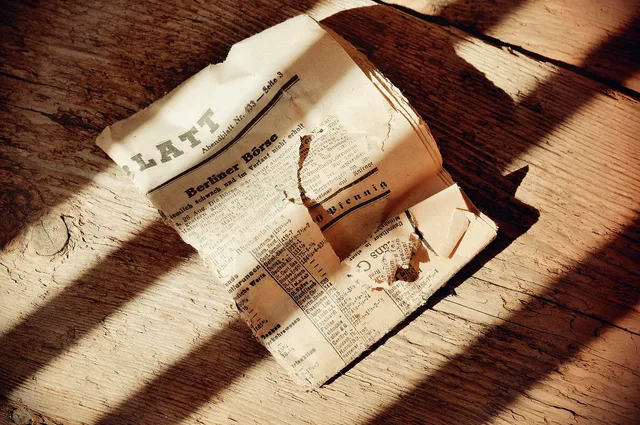
Working with these means working with printed papers, which is a documented craft with its own tools. The Chronicling America researcher guide is the practical starting point for digitized historical papers, and it is candid about what the searching can and cannot find in scanned text.
Institutional remembrance, which is a different thing
Alongside family notices there is a whole category of permanent institutional memorial, maintained by an organization rather than bought by a family. National cemetery administrations, universities, regiments and professional bodies all keep them, and some are now online: the Veterans Legacy Memorial is one example of a permanent, institutionally maintained page for each person in a defined group.
These differ from a paid notice in every way that matters. They are maintained rather than placed. They are updated. They usually have a defined process for corrections and for requests from families. And they are not evidence of anything having just happened either, which is the one thing they share with an in memoriam notice.
Where this sits
The parent page on anniversaries and archives covers what gets marked, by whom, and what an archive holds. For how a death notice and a news obituary differ on the day, see actors who died.
For a record organized by year, where anniversary material is easy to misfile, see deaths by year. For the first days, see deaths today.
Common questions
Is an in memoriam notice proof of death?
It is good evidence that a death occurred, placed by people who knew. It is not evidence of when, unless it states the date, and it is never evidence that it happened recently.
How long do families keep placing them?
Anything from one year to several decades. There is no convention, and stopping means nothing in particular.
Can I place one for somebody who is not a relative?
Usually yes. Publications generally accept them from friends and colleagues, though some ask about the connection.
Will it appear online as well as in print?
Often, and often permanently. Assume anything placed will be searchable indefinitely and write it accordingly.
Can one be removed later?
Ask the publication. Practice varies, and a notice the family placed themselves is usually easier to have taken down than editorial material.