Guides
What the National Archives holds for historical American celebrity obituaries
Federal records confirm a famous life, not a famous death. Census, military and newspaper files at NARA and the Library of Congress do the checking.
What to take away
- NARA holds federal records, not death certificates. A cause of death comes from a state vital records office, a coroner or a medical examiner.
- Census schedules give age, birthplace, occupation and household. They never give a cause of death.
- Military files and pension applications confirm service, rank and dependents, and a widow's pension file can carry a marriage certificate and affidavits.
- Chronicling America is free and searchable by name, date, state and title, but it does not hold every paper.
- A reproduction request needs a record group or series number, a box or volume number, and a description of the document.
- Where records conflict or a field is blank, say so and name the agency that holds the answer.
What NARA holds, and what it does not
The National Archives and Records Administration keeps the permanent records of the federal government. For a celebrity obituary, several useful holdings exist. These include census schedules, military service files, and immigration records. Also useful are naturalization records and passport applications. Selected court and land records are helpful too.
NARA Holds vs Does Not Hold
Held by NARA
- Census
- Yes
- Military
- Yes
- Immigration
- Yes
- Death certificates
- No
- Newspaper obituaries
- No
Not Held by NARA
- Census
- No
- Military
- No
- Immigration
- No
- Death certificates
- State office
- Newspaper obituaries
- Libraries
Everything is arranged in record groups tied to a federal agency. Record Group 29 holds census records. Record Group 15 holds veterans benefit and pension records, including pension applications and widow's pension files. Military service records sit in separate record groups: Record Group 94 for the Adjutant General's Office through 1917, and Record Group 407 for 1917 and later. The record group or series is what lets staff pull the right box or microfilm roll.
NARA does not hold state or local death certificates. Those stay with the state vital records office in the state where the death occurred. NARA also does not hold most newspaper obituaries. That is why a verified entry usually stacks a federal record against a state record against a newspaper page.
The same rules apply to a famous name as to anyone else. Buster Keaton, who died in 1966, served in the U.S. Army in World War I, so his service file is a federal record. Mark Twain, who died in 1910, and Buffalo Bill Cody, who died in 1917, both died inside Chronicling America's newspaper range. A celebrity may also have a census entry, a passport application or a copyright registration. Those records can confirm a date, a place or a relationship that the obituary reported. They can also expose an error that ran in every paper that week.
Start with what you know: a full name, an approximate birth year, a state. Match that against NARA's finding aids. If you cannot name a record group, the research portal is where you begin.
Census schedules as biographical evidence
Census schedules are the backbone of American biographical research. From 1790 to 1950 the federal census recorded names, ages, household members, occupations and birthplaces. Those details confirm that an obituary describes the right person, which matters most when the name is common.
Census Access Timeline
- 1790First federal census
- 1850First to name all free household members
- 1950Most recent census open to public
- 72 yearsClosure period after census date
The 1850 census was the first to list every free household member by name. Earlier schedules named only the head of household. For a subject who died before 1850, you often have to trace a parent or sibling to find the family at all.
Census records are closed for 72 years after the census date. The 1950 census, opened in 2022, is the most recent one open to the public. That gap is the wall you hit on anyone who died in the 1960s or later.
Two limits matter. Census schedules do not record a cause of death. And they do not list every person: enslaved people were not named in pre-1865 federal censuses, though some appear in slave schedules.
Use census data to build a timeline of where the person lived, when they moved and who lived with them. Then line that timeline against newspaper notices and memorial dates. Our guide to reading a memorial timeline of dates shows how to align those sources without double-counting a single event.
Military records and pension files
Military records are among the richest federal sources for this work. A file often carries a full name, rank, unit, dates of service and a physical description. Pension applications go further and can name a widow, children or dependents.
NARA holds military service records from the 1770s through the early 20th century, plus later records with restrictions. For a subject who served, the file confirms or corrects what the newspapers printed. It also explains a detail obituaries often mention without context: a military funeral, a veterans cemetery, a flag on the coffin.
Pension files are the genealogist's prize. A widow's pension application may include a marriage certificate, affidavits from neighbors, and a death date. When no obituary survives, those documents can carry the whole record.
Military files rarely state a cause of death, except for battle deaths and service-related injuries. For anything else you still need a death certificate or a newspaper account. The National Archives military records research page lists what is available and how to request it.
Give the full name, branch, approximate service dates and any known unit. A request without those details can come back unfilled.
Chronicling America and the newspaper record
Chronicling America is a free digital collection of American newspapers from 1690 to the present, with most coverage between 1836 and 1963. The Library of Congress runs it with support from the National Endowment for the Humanities. For obituary work it is usually the fastest route to a death notice.
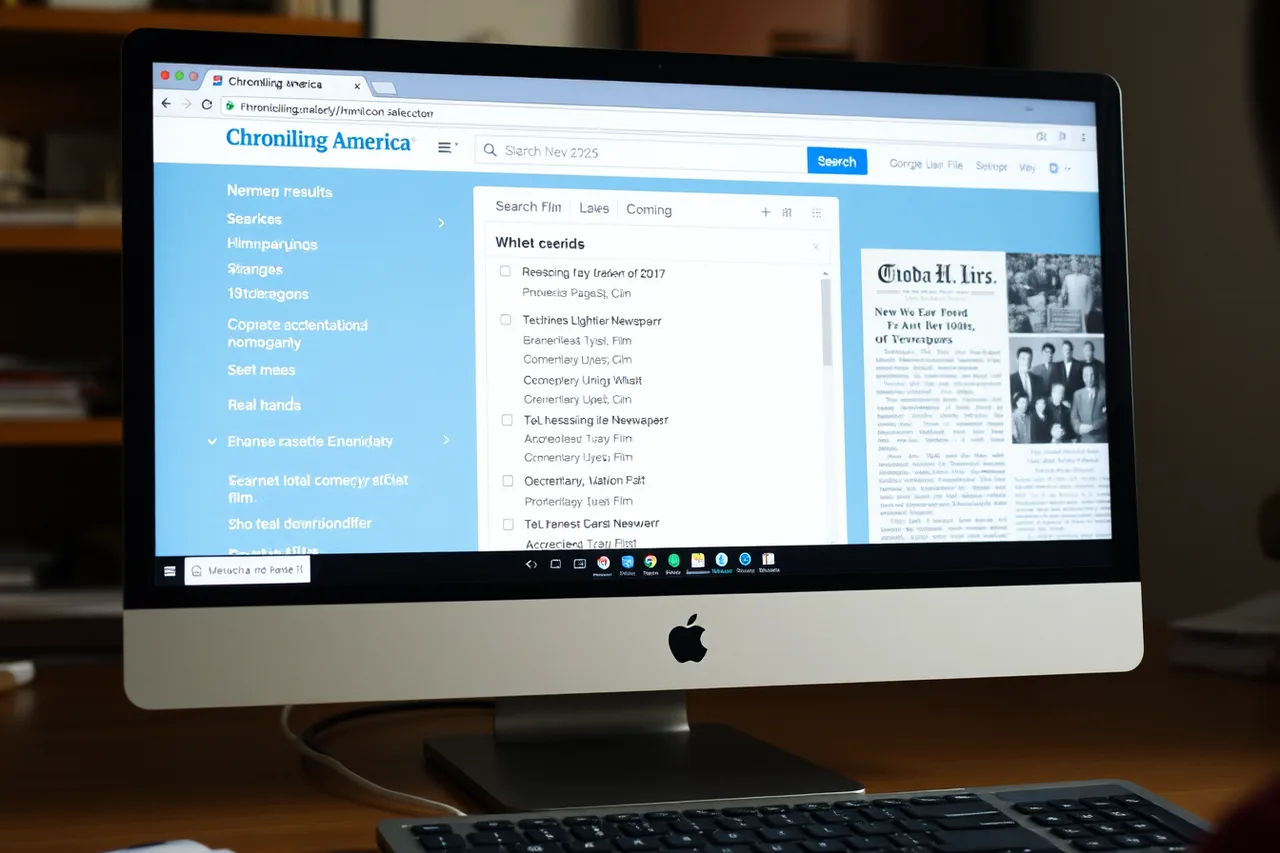
You can search by name, date, state and newspaper title. Results show page images and OCR text, so you read the original column rather than a transcript. Small-town papers often printed a detailed obituary that a city paper cut to a paragraph.
Coverage is uneven. Chronicling America does not include every newspaper, and some titles are still being digitized. If a notice is not there, check the state historical society and the local public library, which often hold microfilm for papers that are not online.
Old obituaries contain errors. Families supplied the information, sometimes within a day of the death. Ages, birthplaces and spellings go wrong. Test what the paper says against the census and military file before you repeat it.
A famous death usually produced notices in several cities. Compare them and keep only the details that stay consistent. Our article on how notices become citations follows that step into a modern archive entry.
Genealogy starting points and the records that fill gaps
NARA's genealogy page is the main starting point, and the National Archives Catalog is where you search descriptions of holdings by record group, series and date. The genealogy page links to census, military, immigration and naturalization records, plus guides for specific groups.
Other federal sources help at the edges. The Social Security Administration once published a public death index, and access is now limited. The National Center for Health Statistics and the CDC publish aggregate mortality data, not individual records. Death certificates stay with state vital records offices.
Passport applications held by NARA are part of Record Group 59, the General Records of the Department of State, and can include a photograph and birth details. Immigration and naturalization case files of the Immigration and Naturalization Service are in Record Group 85, and land entry files are in Record Group 49. Naturalization records usually sit with the court that granted them, and the records of U.S. district courts are in Record Group 21. Each series can place a person in a county at a specific time or document a name change.
Work from the known to the unknown. Start with a death date or place from an obituary, then look for a matching census entry, military file or passport application. Each record either supports the obituary or challenges it, and both outcomes are useful.
If a cause of death matters, you need a death certificate or a coroner's report. Our facts, records and changes guide covers how those vary by state and era. Many archival entries leave the cause blank, and blank is a finding too.
Ordering a copy, and what a request needs
NARA's online catalog searches descriptions of holdings, not just digitized images. Filter by record group, series and date. Some records are available as digital images; the rest need a visit or a reproduction request.
Ancestry, FamilySearch and Fold3 index NARA records and can speed up a search. Always open the original image. Indexing errors are common with handwritten census schedules, and an index is a pointer, not a source.
To order a copy, use the National Archives order page for reproductions, or Standard Form 180 for military personnel records still held by the National Personnel Records Center. A request needs a record group or series number, a box or volume number, and a clear description of the document. Without those, staff cannot pull the file.
A workable sequence:
Ordering a NARA Record
- Identify record group or series
- Note full name and dates
- Check if already digitized
- Submit reproduction request
- Pay fee and wait weeks
- Compare copy and cite
Before you send the request, run this list:
Before You Order
- Confirm full name and spelling variants
- Identify correct record group or series
- Check if record is already online
- Gather birth, death, service dates
- Note any identifying number
Finish the list with three more items: the record group or series number, the box or volume number, and the name exactly as it appears in the record. Add whether you need a digital scan or a paper copy.
An obituary says an actor died in New York in 1924. You find him in the 1920 census in Los Angeles, then in a World War I draft registration. A military file confirms his service and names a widow.
A Chronicling America search turns up a death notice in a Los Angeles paper. The New York death certificate is the next request, and it is the only document in the chain that can speak to cause.
Our article on how the directory is put together shows how those findings become one entry.
What these records cannot tell you
Archival records are not death certificates. They rarely state a cause of death and often omit the exact time or place. For a medical cause you need a state or local death certificate, a coroner's report or a hospital record, and the coroner or medical examiner is the authority on what it says.
Privacy law limits recent records. Census schedules are closed for 72 years. Military records after a certain date may require a next-of-kin request. Social Security and health records are protected.
Newspapers can be wrong. A cause reported in 1924 may have been corrected by the family a week later, and the correction may have run in one paper only. Without the certificate, the cause stays unverified, and a careful archive marks it that way.
Absence of a record does not prove absence of an event. A person can be missing from a census through an enumeration error. A military file can be lost to the 1973 fire at the National Personnel Records Center. A paper may never have printed an obituary.
Use these records to document a life, not to diagnose a death. When the cause is unknown, write unknown. Our article on California death certificate facts explains why that gap is ordinary and how to handle it.
Common questions
These are the questions that come up most often when a famous death is the research target.
Does the National Archives hold death certificates?
No. Death certificates are held by the state vital records office in the state where the death occurred. NARA holds federal records such as census schedules, military files and passport applications that support obituary research.
Can I find a celebrity obituary in Chronicling America?
Often yes, if the paper is digitized and the death falls inside the collection's date range. Coverage varies by state and title, so check the state historical society and local library for papers that are not online.
What is the best NARA record for confirming a birth year?
Census schedules are usually the best federal source, though the reported age depends on who answered the enumerator. Military and passport records can corroborate it, and a pension file may carry an exact date.
How do I request a military record for obituary research?
Use the National Archives order page, or Standard Form 180 for personnel records held by the National Personnel Records Center, and give the full name, branch, service dates and any known unit. Without those details staff may not locate the file, and the request comes back unfilled.